Carolina Mountain Sports carries select backpacks by Osprey, North Face, Kelty (internal and external frame), GoLite, Equinox. We are happy to do special orders, if necessary, to accommodate various torso lengths and sizes.
CMS Pack Tip: In our experience (both hiking for 35 years and fitting packs on customers for 10 years) , proper fit and feel of a pack is critically important. Torso measuring devices and charts are a good starting point but they do not take into consideration dimensions such as the thickness of a person’s chest and shoulders, or the length of their neck. There is no substitute for trying on a pack containing weight, and having it fitted properly, by a knowledgeable, experienced sales clerk.
All of the major pack manufacturers make excellent packs, but all the brands fit and feel differently, even though they may be the same torso size. Straps are cut and contoured differently, padding is located in different spots, and hip belts are cut and contoured differently. One person may love a particular brand and model of pack, and another person may find it intolerably uncomfortable. Don’t buy based solely on advertising, another person’s recommendation, or a product review. Try it on, with a load in it, and decide based on fit and comfort.
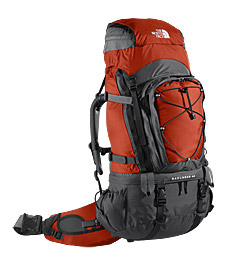
Our inventory includes a variety of backpacking accessories and gear, and we try to maintain stock on the most important and frequently needed items. Some of our products are not available in large chain stores or from internet dealers. If it’s not here, we’re happy to order it from one of our suppliers. Some items can be delivered in 3 or 4 days. Others, from the west coast may take 5 to 7 days to arrive. There is an endless variety of accessories and special needs products that we can order from the 3 largest outdoor specialty distributors in the country. Things like buckles, straps, cord locks, insoles, lanterns, water proofing treatments… and much, much more are easily ordered. Specialty brands in addition to those already mentioned include Outdoor Research,Exped, Leki, NEOS, Equinox, Etowah Outfitters, Thule, Cascade Designs, Liberty Mountain, Solstice, Alps Mountaineering, Chota, Teva…and many others.
SLEEPING BAGS
Our sleeping bag inventory is typically comprised of models from The North Face, Kelty, and Western Mountaineering. From The North Face we usually stock the Orion, Cat’s Meow, the economy priced Aleutian, and the youth Blue Ridge. These are excellent synthetic bags, rated at 20 degrees, and are very popular with our customers. North Face has recently shifted to Climashield synthetic insulation. This new insulation appears to offer significant advantages over other synthetics and at no increase in price. Depending on the season, we will have other bags in stock.
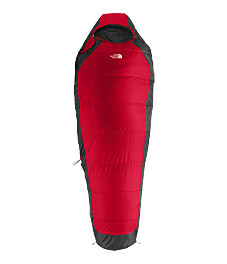
For the budget minded camper, the Slumberjack Latitude has proven to be a good seller. It uses Slumberjack’s SlumberLoft HQ insulation and weighs in at an acceptable total weight of 3lb. 9oz for only $55. We’re happy to order any of the Slumberjack models or any of the bags from Eureka. CMS can also order sleeping bags from Sierra Designs, Alps Mountaineering, as well as Coleman and a few others. If you are looking for something special let us know.
Western Mountaineering is a manufacturer of superb goose down bags at a premium price. But, for the customer seeking the most warmth for the least weight and the greatest longevity, WM’s goose down bags are the way to go. Compared to other manufacturers, we find WM’s temperature ratings to be very conservative.
Bag Selection Tips:
Larger campers should be very alert to the dimensions of mummy bags. They are not all cut the same. Try to compare shoulder circumference measurements, but, it’s best to actually crawl in a bag and zip it up. If you need a bag larger than a long “cut” several manufacturers make oversized mummy bags that are quite roomy.
Temperature ratings are estimates of a bag’s comfort range. The ability of a bag to meet it rating varies from one individual to another and depends on a person’s level of hydration, food intake, metabolism and other factors. The assumption is made that a camper will be using and insulating foam pad underneath their bag and will be in a shelter or tent, and often wearing long underwear. Take these factors into account and consult with a knowledgeable sales clerk for more guidance.
Today’s synthetic insulated bags perform great and are very popular, especially due to their lower price. However, many serious hikers, especially those seeking lightweight and compactness still choose good quality goose down.
Quality down is an excellent insulator and performer. It does not get wet the way synthetic manufacturers and others would have you believe; it has a broader comfort range; it has a longer lifespan than synthtics and quality down is lighter and more compressible than synthetic insulation.. If you are interested in down, consult the various literature that’s available and then talk with someone who has used down for years on backpacking and canoe trips, in all kinds of weather. You just may be surprised. We are big fans of good goose down and, if you want to know more, give Richard a call.
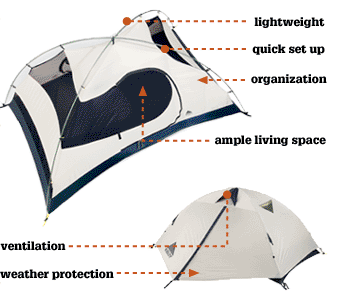
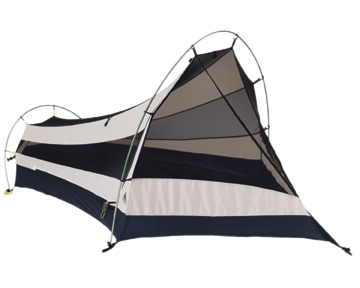
Our tent inventory includes models by Kelty, North Face, Sierra Designs, Eureka, Alps Mountaineering, and Mountain Safety Research. We stock predominantly 2 person models, but also carry some 1, 4 and 6 person tents for family camping. As with other products, special orders are easy and frequently done to get a specific model for a customer. Lightweight tarps are an important shelter or accessory and we carry models by Kelty, Etowah Outfitters and Equinox.
Tent Buying Tips
The well-known tent manufacturers produce excellent products and all stand behind their models. Make sure you are correctly interpreting the specs and particularly the tent weight. Tent weights are published in several ways and this can be confusing and misleading.
Most backpacking tents are just roomy enough to accommodate the number of people specified. Frequently, there is no extra room inside for gear (unless the tent has a generous vestibule or two). Consequently, a hiker wanting a solo tent may actually be well-served by an ultralight 2-person model. Likewise, a person wanting a 2-person tent may want to consider a 3 or 4 person model.
Ventilation and netting can be important features especially in the southeast. And, most 3-season tents will perform quite well during the winter as well, if your campsite is not exposed to severe winds and snow weight. In fact, most tents perform perfectly well through all 4 seasons in the southeast, and other parts of the country.
Learning to properly pitch a tent, beyond the simple staking and guying instructions, is an important skill to acquire. In addition, placing plastic sheeting on the inside floor of a tent (rather than underneath) , will help you stay dry when water is standing on, or running over, the ground. Yes, we recognize this is contrary to most guidance…but it works. Water that gets between the groundsheet and tent floor will seep through. Read some of Cliff Jacobsen’s books for excellent guidance on pitching tents, or some of the late Harry Roberts’ writing.
Brands in stock include Vasque, Asolo, Columbia, North Face, Teva. These and other companies produce excellent footwear. Most of the boots we carry are models with a Gore-tex or other waterproof/breathable membranes.
The relatively new Vasque Wasatch and Breeze have been our top sellers lately. Customers looking for an inexpensive boot have been happy with the Columbia waterproof models for $80.
We carry socks by Smartwool, Columbia and Fox River. Smartwool continues to be our top seller and we stock several models from liner socks to expedition weight. Repeated feedback from new customers continues to reinforce the benefits of good wool socks, whether for casual wear or for outdoor use. On a regular basis, customers who think they cannot wear wool find out that Smartwool is proof that they can.
CMS Boot Tip
Like backpacks, the most important aspect of a boot is fit and comfort. Realizing there is little or no standardization of sizing in the boot industry, boots must be tried on with the socks you anticipate wearing. Typically, hiking boots should be about a size, to a size-and-a-half, larger than street shoes. This is only a guide. Boots should definitely be longer to avoid toe impact on downhill trails.
Also, like backpacks, the fit of boots can be fine-tuned. This is best done by changing sock combinations and thickness, as well as changing insoles. Boots must be tried on and worn for quite a few minutes, or longer, before a final decision is made. Also, we encourage boot shoppers to try on different brands and sizes. Since there is little standardization, one brand (or model within a brand) may be just right, even though several other models didn’t fit.
Good fit in a hiking boot is critical. It is not unusual to find that someone needs a longer boot than they imagined. One important factor is “arch length,” the distance from the heel to the ball of the foot. The boot should, ideally, bend or flex at the ball of a person’s foot. Frequently, the proper arch length requires a longer boot.
Winter can be fun and challenging. Camping and backpacking, can increase challenges and dangers. In the backcountry, you can’t get in a warm car, or scoot home for a hot shower and dry clothes. On a winter outing, there may be no supplemental source of heat or endless amounts of warm clothes. On a camping trip, your clothing and the way you wear it and adjust it must work for you day and night, day after day. Here are time-tested tips for staying warm and dry. If you prepare and pack accordingly, you can stay safe and comfortable in cold, windy, wet and snowy conditions. If you don’t, you may create a miserable and unsafe situation for you and others. And remember, weather in the mountains can be very different and colder than in your neighborhood. Be prepared
STAY DRY: Avoid excessive sweating and getting clothing and insulation damp. Wear rain gear when needed. Even Gore-tex raingear needs maintenance and re-treatment of the outer fabric layer, to perform properly.
PACK AND WEAR LAYERS: Add and take off layers as the conditions change and to adjust for different temps and activity levels to minimize sweating. Layers are warmer than a single, heavy coat and offer more versatility.
PACK LIGHT BUT RIGHT: clothing should be lightweight, versatile, compressible, and have multiple uses…
HANDS & FEET COLD FIRST: Your body reduces the flow of warm blood to hands and feet first to keep vital organs warm. Put on extra layers on your upper body and your head, even though that area may not feel cold…before feet begin to chill.
COVER THE HEAD AND NECK: Head and neck loose lots of heat. Wear a hat and protect the neck from heat loss.
COTTON KILLS: Cotton holds moisture, is slow to dry and when damp conducts heat from the body. Synthetics and wool are the fabrics of choice for hiking and camping.
FUEL YOUR FURNACE: Food provides fuel for your body to generate heat. Eat right and snack often during winter outings.
DRINK A LOT: Fluids are critical in winter. You may not be hot and sweaty but your body dehydrates rapidly in cold weather. Drink a lot so your metabolism works properly.
Winter Weather Wisdom…
CLEAN, DRY CLOTHES: You can’t carry much so keep some clean, dry clothing for evening and night wear. Put the damp and dirty stuff on again the next morning for the day’s activities… Have a pair of wool or fleece socks, and extra long underwear, that you ONLY wear inside your sleeping bag.
THE INSULATION BELOW: It’s critical to insulate underneath your sleeping bag with a thick, waterproof foam sleeping pad. In really cold weather, add another foam pad.
BIG BOOTS: Boots should be big enough to allow for at least a good liner sock and a pair of thick, wool socks…and still have room to wiggle your toes. When buying boots for cold (and growth) fit them wearing two pairs of heavy socks. Cramming extra socks in your boots only restricts the flow of blood and your feet still get cold. Treat the leather to maintain it’s water repellency, even with Gore-tex boots. Rubber, insulated boots or “pacs” are great for cold, wet winter conditions and do fine for moderate hiking.
Put boots in a plastic bag and inside your sleeping bag to keep them from freezing.
MITTENS AND MORE: Mittens are much warmer than any glove. In a pinch, put a pair of wool socks on your hands. Consider a pair of thin, synthetic liner gloves for dexterity, an inexpensive pair of wool mitts, and a shell mitt for wind and water protection. Yes, it’s layers on the hands too.
WINDWEAR: Lightweight nylon jogging pants and jackets make great wind barriers. Combined with long underwear and fleece or wool sweaters, they make part of great layering system. But, it does not eliminate the need for good raingear…unless your windwear is a waterproof and breathable fabric made with Gore-tex or other moisture barrier/breathable membrane.
AIR IT OUT: On multi-day trips, the sleeping bag should be aired out and dried in the sun each day. During the night, your body and skin give off as much as a pint and a half of moisture. If a sleeping bag is not aired out, your insulation gets more and more damp….and dampness conducts heat away from your body.
ZIP IT: If you don’t zip up jackets and sleeping bags, and cinch down drawstrings and velcro, you let warm air escape. Conserve the heat that your body is generating and Zip it shut!
INSULATE THE TOTAL PACKAGE: The world’s best coat won’t keep you warm if you don’t insulate the whole body. A warm coat is great but you must help it do its job with socks, long underwear on your legs, and insulation on neck, head and hands.
CHECKLIST FOR WINTER WEAR |
|
__ |
several pairs of Wool Socks |
__ |
polypro or polyester (better) Long Underwear |
__ |
synthetic or wool shirt/pullover |
__ |
vest |
__ |
wind pants and jacket |
__ |
raingear |
__ |
liner gloves |
__ |
mittens or gloves |
__ |
neck gaiter |
__ |
wool or fleece hat or balaclava |
CHECKLIST FOR A GOOD NIGHT’S SLEEP |
|
__ |
quality 20 degree rated (or colder) “mummy” bag |
__ |
fleece liner bag or blanket |
__ |
1-2” thick foam pad (waterproof) |
__ |
extra ¾ length foam pad for single digit temps |
__ |
clean, dry, wool socks |
__ |
clean, dry, long underwear |
__ |
wool or fleece hat |
__ |
drape a sweater or jacket around neck for a draft collar inside your bag |
__ |
eat a good meal with fluids |
__ |
eat candy right before turning in |
__ |
earplugs for tent mate’s loud snoring or teeth chattering |
By Richard Griggs
The information here is based on years of winter backpacking, snowshoeing and cross-country skiing in the Great Smokies of NC and Tenn., the White Mountains of New Hampshire, on and around Mt. Washington, the Shenandoahs of Virginia, and the Ozarks in Missouri. In addition, it draws on the experience of others. And, it is based on winter camping and backpacking with Scouts, beginning with a search for a lost Scout in snow and freezing rain in the Great Smokies and ending more recently with scout camping trips in snow, ice and single digit temperatures.
Be prepared. How often have you heard that? Be prepared…”hope for the best but prepare for the worst.” That way you can tackle whatever happens with a positive attitude knowing that you are indeed ready and capable, because you have planned and prepared for the worst you might encounter. But, in all too many cases we rationalize by thinking or saying things like “it’s only for one night;” “we’ve been there before;” or “I’ve spent a small fortune on the best equipment money can buy.” And then, you’re caught by surprise and aren’t prepared…
WEATHER
Weather in the mountains is almost always colder than where we live in the foothills and Piedmont. Weather in the mountains can change abruptly and you can encounter “micro climate” conditions or localized weather unlike that in nearby areas and different from what has been forecast. Weather can also change with only a change of a few hundred feet in elevation. Hiking from 3,500 feet to 4,000 feet could easily move you into dramatically different weather conditions.
Weather forecasts do not adequately inform us of the potential for adverse weather at higher elevations. Regardless of the forecast for ski areas and mountain communities, the actual weather near the summits of Mt. Rogers, Mt. Mitchell, Clingman’s Dome and other elevations above 4,000 feet can easily be severely and devastatingly different. Winds, which are already brutal, may double in strength when they are forced against ridges and through gaps. And, winter in NC mountains continues until mid-to-late April. Some of our deepest snows have fallen in mid-April and early May.
BOOTS
Snow, sleet, freezing rain…sounds like you need waterproof boots. Combine that with good, wool socks and the ability to comfortably layer socks for warmth and you should be okay. But, layering for zero degree temps is different than for 30 degree temps. Whose boots are really big enough to layer at least two pairs of heavy wool socks? Furthermore, dampness reduces the insulating ability of all materials.
What about Gore-tex boots? Great, but that Gore-tex membrane is laminated to the boot’s inner lining and doesn’t keep the leather from soaking up water and then freezing solid when the temperature plummets. Even if they aren’t wet from the outside, the leather is probably damp from perspiration/water vapor from the inside, and they will still freeze. Even with Gore-tex boots, it is important to treat the leather and fabric with products like Nikwax, Grangers, etc. to keep the materials as water repellent as possible.
(remember, however, water repellent does not mean waterproof…)
How do you keep leather boots from freezing? Put them in stuff sacks or plastic bags and then sleep with them behind or under your knees, or at your feet, inside your sleeping bag. Although it may be slightly uncomfortable, this works. Numb and frostbitten feet and toes are more uncomfortable
Rubber insulated boots, or neoprene boots, may not be the greatest for hiking long distances, but they don’t absorb water and thus cannot freeze solid. And, they provide a layer of insulation than cannot get wet from perspiration or from external moisture. Do they trap perspiration? Yes, but a change or two of socks and/or “vapor barrier” socks are a whole lot drier than socks saturated by melting snow. (The vapor barrier principle can be applied with clothing and sleeping bag liners in extreme cold…but should be further researched to insure an understanding of its applications.)
Chemical heat packs may also provide a source of heat that can keep boots from freezing.
DEEP SNOW
How do you keep snow from entering the tops of ankle-high boots? Gaiters is one solution, especially ones that come to the knee. This also adds considerable warmth to the lower leg. Quality waterproof/ breathable rain pants, that more than adequately cover the ankle, will help. A combination of both is probably the best answer. High top rubber or neoprene boots work, particularly if wearing rain pants. Overboots are also an option. Insulated overboots, such as those by Outdoor Research, can be expensive. A less expensive option, and perhaps better for hikers, is the Neos overboots or overshoes.
Another solution is snowshoes. Yes, even in NC. They keep you from sinking into deep snow, to some degree, and keep the snow away from your boots, ankles and pants legs because of their large footprint. Inexpensive snowshoes may be adequate to the task. They add some weight to your pack, and you may not need them. But, if you do they are a real benefit. Everyone may not need them, but one or two pair per group can help break and clear trails.
Without snowshoes, what are the potential consequences? Walking in snow without snowshoes can be very exhausting, or impossible if it’s deep, or wet and slippery, and you can generate massive amounts of sweat which wets clothing. In an emergency, it may be possible to easily make a snowshoe substitute. Do you know how?
RAINGEAR
Good raingear can be a lifesaver in winter certainly, but also in spring and summer. Hypothermia can begin when the air temperature is in the 50’s. But in order to be effective, raingear must be worn. Does it trap sweat? Yes, but waterproof/breathable raingear and adjusting your layers will help you manage that moisture. Not wearing raingear simply exposes you and your clothing to soaking wet conditions and wind chill.
CLOTHING…AVOID COTTON
Wearing cotton clothing is an invitation to disaster. Jeans, sweatshirts, and other clothing of cotton is heavy. It soaks up water like a sponge and is slow to dry. When selecting your clothing think wool and polyester and nylon…. multiple light layers that can be adjusted as needed, and will dry faster… is always better than one heavy layer.
Clothing for winter is typically designated in three categories:
Base Layer: good long underwear made of polyester, wool or a blend of the two. The older polypropylene, although functional is now outdated by the newer polyesters.
Insulating Layer: typically polarfleece vests and jackets, or quilted synthetic and goose down. Wool sweaters and vests have proven to be excellent insulating layers for many years. Despite the popularity of fleece, wool is still an excellent insulator.
Outer Layer: Wind and waterproof technical shell parkas and pants. Gore-tex or similar waterproof /breathable material is excellent and effective. Even these products need to be “maintained.” The water repellent treatment of the outer fabric, which is bonded or laminated to the waterproof/breathable membrane, wears off. That means the outer fabric can become wet. Once wet, it reduces the breathability of the membrane and can freeze. Maintain the outer fabric of waterproof/breathable clothing by washing and retreating garments with a product like Nikwax, Grangers etc. for waterproof/breathable clothing.
Do not disregard simple, coated waterproof garments. They are less expensive and can be lifesavers in wet and cold weather. Managing the moisture generated by perspiration is more of challenge, but it can be done. Wool and fleece clothing dampened by sweat loses some of its insulating ability…but not nearly as much as when it is saturated by rain and snow.
Two sets of good, polyester or wool long underwear are a major benefit. Always have a dry set to wear in camp or in your sleeping bag. When hiking, put on the damp long underwear….just don’t wind up with two sets of damp long underwear. Wearing damp clothing while performing camp chores, or hiking at a slow steady pace, will help dry it. The same is true of socks.
Damp clothing can be kept in sleeping bags to keep it from freezing…or in some cases to dry it slowly while sleeping. The potential for drying should be weighed against the potential for wetting the sleeping bag insulation.
Regardless of the claims of wicking and quick-dry products, probably none performs as well as manufacturers would have you believe. Sweat-dampened clothing looses some of it’s insulating ability. In extreme temperatures, it is critical to have dry clothing, especially socks and base layers.
Thickness determines insulation. The thicker (e.g. more layers) your clothing or sleeping bag, or foam sleeping pad…the warmer it is.
MITTENS AND GLOVES
Gloves? Well, maybe. Typical waterproof ski gloves have the waterproof membrane on the inside near, or next to, the hand. The outer layers and insulation can still become wet. Consequently they are not the best choice for extreme weather for trips into the backcountry.
But always have a pair of good wool or fleece mittens that are protected by separate waterproof (or waterproof/breathable) shell mittens. Wool gloves are excellent and inexpensive, and offer dexterity when needed. But, nothing is as warm as mittens for critical warmth. And remember, when you put your hands in snow…they get wet. Even the best of gloves, just like clothing, need to be kept as dry as possible. Wool gloves for chores and dexterity, and wool mittens for warmth is a good combination. Either can be worn under the shell mitts.
In a pinch, put extra wool socks on your hands. Good, dry, wool socks work great as emergency mittens.
BALACLAVA
Conserving the heat loss from the head and neck is critical. There is no substitute for a good, thick, wool or fleece balaclava, that covers the neck and most of the head and face. Face masks are good, neck gaiters are good. Hooded jackets are good. But, they are not as good as a balaclava. With any knitted garment, the tighter the knit, the more wind resistant it is. Combining balaclavas, or wearing a wool or fleece hat over a balaclava obviously increases the insulation. The better your head is insulated… the warmer your body and extremities. A good, full-coverage hood on a technical parka works great when worn over a balaclava, to prevent loss of insulating ability due to wind penetration. Often, however, hoods on many jackets do not cover the face, and wind can penetrate the insulation of even good balaclavas.
EYE PROTECTION
With good mittens and the full face coverage of a good balaclava and hood, the only exposed skin remaining is around your eyes. So, protect that area with goggles or good sunglasses. Hiking into the wind when it is blowing snow and sleet is annoying and sometimes painful. A good, full hood on a technical parka will provide a “tunnel” that offers eye protection. Also, don’t discount the need for good sunglasses on a bright, sunny day in snow-covered terrain. Eye protection can be critical.
WATER
Water is critical. Regardless of the temperature, water is needed to maintain a properly functioning metabolism. In fact, in cold weather, you should increase your fluid intake more than you think you need. Make yourself drink, drink some more, and then drink more.
Obviously, with temps below 32 degrees, water will begin to freeze in containers. Carrying them upside down will slow down the freezing at the mouth of the bottle. (Make sure it is a Nalgene bottle that won’t leak) Insulate the bottle with a sock or neoprene sleeve. Carry the bottle inside your shell parka, where body heat will keep it from freezing. Sleep with it at night, or burrow it in clothes between sleeping bags.
When everything is frozen and snow covered, where do you get water? In most cases the answer is melting. You must melt snow and ice. Have you ever done it? It is a practiced skill?. How much more fuel do you need?…a lot more. What will you do if the stove doesn’t function? Can you build a fire?
FIRE
Are you really proficient in fire building?...in adverse weather conditions? Do you really have the developed skills of gathering tender and kindling, and wood for fuel. Can you build a fire in the rain? Can you build it in the snow, or on top of frozen snowpack? Can you build it when wood is covered in ice…in 40mph wind. It can be done. Have you thought through the process and practiced it?
Do you have a saw? Do you have an axe (or long bladed, rugged knife that can be driven thru lengths of wood using another piece of wood as a mallet) to split wood to expose the dry inside? Do you have emergency tinder and kindling, packed away in a waterproof pouch? Do you have kitchen/strike anywhere matches and a butane lighter?
When you least expect it, fire-building skills can become a critical survival skill. But, it is not a skill simply acquired by reading. It must be practiced and developed in less than ideal weather conditions.
Remember, proper preparation of tinder, kindling and fuel will result in success. Dousing wet and ice-covered wood with stove fuel usually does not work, is dangerous and only wastes precious stove fuel.
FUEL FOR YOUR FURNACE…FOOD
Food is also critical. In the winter, food provides the fuel for your body’s furnace. You must have a steady intake of calories. If you can’t cook food on stoves due to no fuel or malfunctioning stoves, you must have an alternative. Fire or fuel tabs may be the solution. Or simply pack some food that doesn’t require cooking. Cold food still has calories. Hot food has no more calories than cold food. Eat and snack frequently. Getting cold in you sleeping bag at night? Have a snack and drink some water. It will “jumpstart” your metabolism.
STOVES
toves are excellent sources of heat for cooking and melting snow. Liquid fuel stoves (that use Coleman Fuel, kerosene etc) are generally the best for extreme cold. Stoves that operate on canisters (“bottled gas” like propane, iso-butane and butaine/propane mixtures) may work as well. But, efficiency of these cartridge stoves falls off in temperatures below freezing and as the cartridges are used. Sleeping with the cartridge, or carrying it inside your clothing, until needed will keep the fuel warm and make the stove more efficient. Setting the stove in a pan of water will also assist in more efficient use of cartridge stoves.
Lighting and operation of a liquid fuel stove in extreme cold may be a much more difficult process than in warmer weather. More fuel may be required. Practice this skill before your safety depends on it.
TENTS
For most, the tent is the shelter of choice. Although a 4-season mountaineering tent is ideal for extreme weather, a 3-season model may suffice, if it has a full-covering rainfly. A free-standing tent excels in high wind and snow.
With any tent, it may be absolutely necessary to add additional guy lines, to protect and reinforce the tent in strong winds and snow. If there are no external guy points, tie lines to tent pole intersections and stake or tie down the tent’s frame before adding the fly. Extra guy lines will stabilize a good tent and preclude the collapse of a 3-season tent in severe wind. Do you have large stakes suitable for deep snow…or stakes suitable for frozen ground? What are the options if you cannot drive stakes into frozen ground?
SLEEPING BAGS
You sleeping bag becomes your survival cocoon in bitter cold. Winter camping in extreme weather usually dictates at least a bag rated for zero. However, a quality 20 degree bag with a fleece liner and the person wearing dry long underwear and balaclava may suffice…especially if there is adequate insulation underneath. That usually means a Thermarest pad and a full-length Ridgerest pad.
Bags are not just for sleeping. They are to get in when your feet are getting chilled or have become numb, for long periods of inactivity and for warmth while cooking In extreme weather you can live in the bag unless you need to be outside performing chores or moving around.
And, you must keep sleeping bags dry regardless of the type of insulation. This may require stuff sacks that are really waterproof, plastic bags, and rain/snow cover on backpacks. In cold weather, the moisture generated by your skin and breathing will condense on the outside of your bag (or in its insulation). This will always happen to some degree, depending on temperatures and humidity. A potential solution in extreme cold is a vapor barrier liner inside your sleeping bag. This liner prevents the moisture from your skin from reaching the insulation of your sleeping bag. As a result, you could place a waterproof cover over your bag to prevent dampening from tent condensation “raining” on you, or falling ice from the walls of your tent.
If you anticipate camping in extreme cold (15 degrees or colder), a good understanding of the vapor barrier principle, and its pros and cons, will benefit you substantially.
TRACTION IN ICE AND FROZEN SNOW
Frozen snow and ice can make travel all but impossible due to slippery conditions. If you aren’t prepared to remain at your campsite for at least an extra day, are you prepared to walk out? This may involve carrying emergency crampons (Ice Walkers) or other traction aids. Simply screwing some hex-head sheet metal screws into boot soles will substantially aid in traction. Are you prepared for ice? It is a common occurrence in winter and could delay or postpone hiking, or at least make hiking treacherous. Deep snow cover, that has begun to melt and then refrozen overnight, can make travel all but impossible if you are not prepared with something to aid in traction.
BE PREPARED
There is no question … scouts and leaders can enjoy a camping trip in mild or severe winter conditions. Scouts and others do it all the time. But…Be prepared. Be prepared for the worst conditions you might encounter. Be prepared with the right equipment and experience. Be prepared to alter your plans, if conditions dictate a different course of action…
MORE INFO
This article only highlights some key aspects of cold weather camping. For more information and thorough discussions of all aspects of winter camping, the following books are excellent. They provide in-depth discussions of equipment, techniques, food and preparation. Any outdoor specialty shop should be able to order…
References:
Adirondack Mt. Club’s “Winter Hiking and Camping” by Danielsen
“Cold Comfort” by Randall
Backpackers…”Winter Hiking and Camping” by Lanza
“Mountaineering, The Freedom of the Hills” by The Mountaineers Books
BSA Fieldbook, Third Edition 1984
Any of the books by author Cliff Jacobsen provide excellent, practical and proven advice on making tents more secure and weatherproof, as well as successful and simple methods for splitting wood and starting fires; and guidance for clothing in wet and cold conditions.